Visualization-led tender response across 5 urban locations - solo.
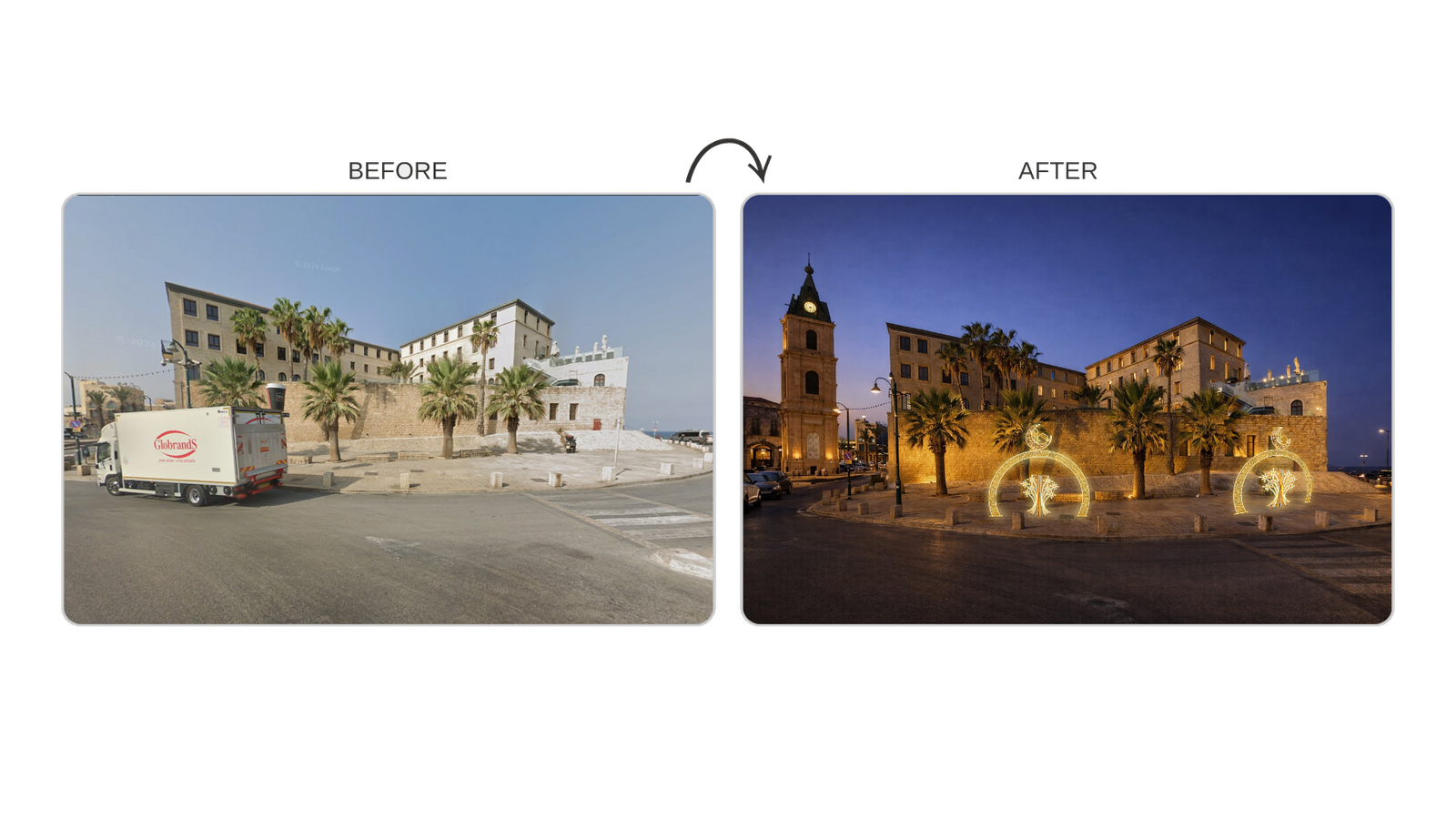
Divolight (CD-Log's lighting subsidiary) was responding to a Tel Aviv municipal lighting tender. The tender required showing how proposed fixtures would actually look in five specific urban locations. I produced 40 photorealistic montages (5 locations × 8 fixture models) solo, in under a week, integrating 3D fixture models into real location photography. The tender was won, and visualization-led tendering became Divolight's repeatable standard.
Municipal lighting tenders are decided largely by committee review of paper-and-PDF proposals. Standard practice is catalog photos and spec sheets. Real impact in those committees comes from helping decision-makers picture the result.
Standard practice is catalog photos and spec sheets. But committee members need to picture the fixture on their street - not in a studio.
The gap between spec sheets and real decisionsStakeholders: Divolight leadership · Municipal review committee (the actual decision-maker)
Key constraints: Hard tender deadline. Solo production (no team available). Photographic accuracy non-negotiable - a fudged location photo damages credibility with the committee.
| Option | Approach | Verdict |
|---|---|---|
| Full 3D rendering | Build 3D scene of each location from scratch | Rejected - 10× the work, ~5× past deadline |
| Catalog photos only | Standard spec-sheet submission | Rejected - doesn't differentiate, can't visualize in situ |
| Photo-montage | Real location photos + 3D fixture model integration | Selected - authenticity + accuracy within deadline |
Trade-off accepted: lighting simulation is plausible, not physically simulated. For a presentation deliverable this was the right line; for an engineering deliverable it wouldn't be.
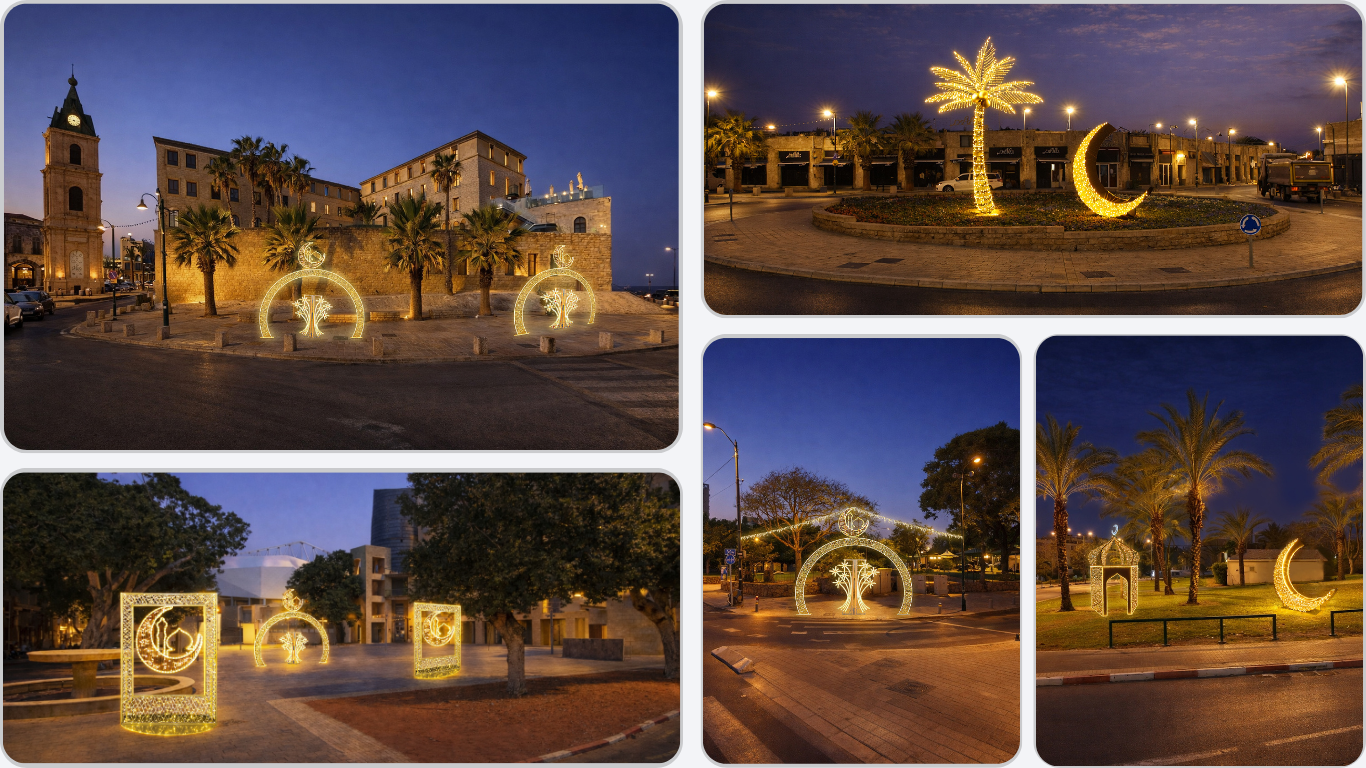
Produced all 40 montages individually with no shared template or reference layer system. Output spec - crop, resolution, file naming - was decided as I went.
Establish a per-location template library before production starts: reference layers, perspective guides, agreed output spec. Would cut iteration time significantly and make the workflow handoff-able for future tenders.